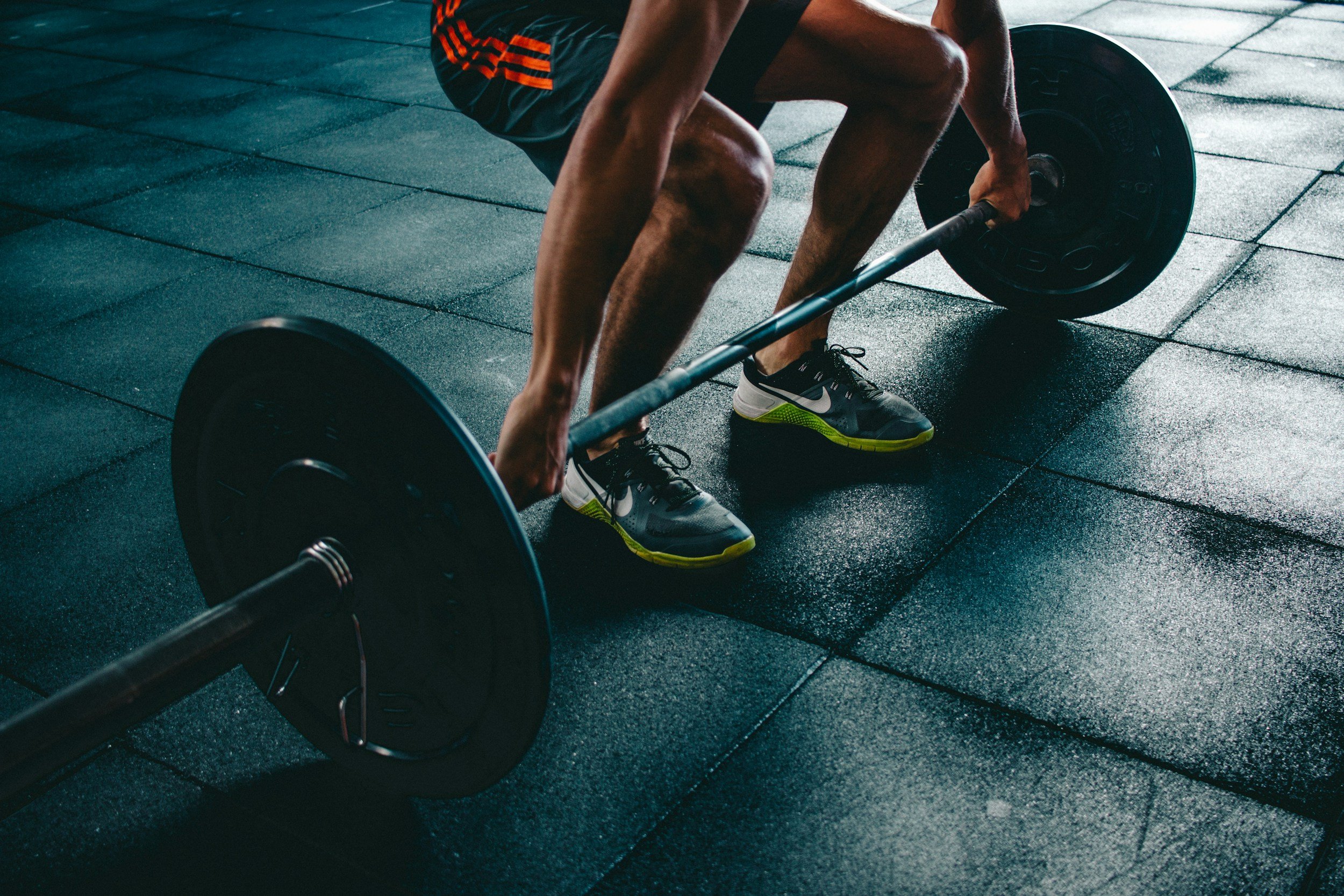
The deadlift is to the exercise world what the shark is to the oceans. Deadlifts are wrongly feared because they are so wholly misunderstood. Deadlifts should be a cornerstone of every single training program, regardless of one’s specific goals. I spent years avoiding them out of fear and a lack of knowledge, and I’m still repairing the damage that avoidance caused. Now, I hope to put you on the right track by debunking common misconceptions around the deadlift and helping you understand why it’s imperative to make them a part of your training as soon as possible.
1. Deadlifts are bad for your back
An accurate statement would be: bad deadlifts are bad for your back. Anyone who’s been around the gym long enough has met another lifter who’s sworn off deadlifting after a back injury. It was hearing those stories that made me avoid it for years as well, thinking I could replicate its benefits by training the muscles individually.
Done with proper spinal alignment, deadlifts actually serve to strengthen your lower back. Ironically, a weak and/or tight posterior chain (the muscle group that deadlifts target) is a common cause of lower back pain. A 2021 study found that targeted posterior chain resistance training (as opposed to non-specific training) significantly reduced pain in patients with chronic lower back pain over a four-month period (Tataryn et al., 2021).
2. Deadlifts are a hamstring exercise
True, a high percentage of the load is borne by the hamstrings. However, the movement also recruits your glutes and lower back. Additionally, it trains your hip mobility, core stability, and core strength. There are many variations, which can train everything from your single-leg balance to your hamstring flexibility to your maximum force production.
3. Deadlifts are only for powerlifters
While powerlifters get all the deadlifting glory (like Thor Bjornsson, who just lifted a record 510 kg/1124 lbs in September), deadlifts are a crucial quality-of-life exercise for all age groups. People often joke about “picking things up and putting them down,” but if you can’t pick things up off the floor and put them down with correct form, one day you won’t be able to. Lack of mobility and functional ability leads to a lack of independence later in life, and is even associated with an increase in mortality in elderly populations (Keeler et al., 2010).
You don’t have to lift 500 pounds to derive benefits from deadlifting. Stop fearing the deadlift and start mastering it. Incorporate them into your workout routine, and you’ll reap the benefits.
References
Tataryn, N., Simas, V., Catterall, T., Furness, J., & Keogh, J. (2021). Posterior-Chain Resistance Training Compared to General Exercise and Walking Programmes for the Treatment of Chronic Low Back Pain in the General Population: A Systematic Review and Meta-Analysis. Sports Med Open. 7(17). https://pmc.ncbi.nlm.nih.gov/articles/PMC7940464/
Keeler, E., Guralnick, J.M., Tian, H., Wallace, R.B., & Reuben, D.B. (2010). The Impact of Functional Status on Life Expectancy in Older Persons. The Journals of Gerontology: Series A, Biological sciences and medical sciences. 65A(7). https://pmc.ncbi.nlm.nih.gov/articles/PMC2884085/
