3 ways weightlifting can ruin your athleticism as an athlete
If you’re an athlete, you’ve probably had a parent, coach, or random person online tell you that “weightlifting will ruin your athleticism.” This couldn’t be further from the truth. Weightlifting does not inherently ruin athleticism—in fact, it’s your greatest tool for increasing it. It’s improper training that harms it and increases your risk for injuries. Here are the three main ways that weightlifting has the potential to ruin athleticism.
Loss of mobility
Many lifters put too much stock in how much weight they can lift, only utilizing a limited range of motion. Also known as ego lifting. When you train with a compromised range of motion, over time your body adapts and your joints reduce their range of motion. Then when you step onto the pickleball court for the first time, you blow out your Achilles because your ankle has tightened up so much.
Loss of explosiveness/speed
Slow and controlled is great for hypertrophy…but not always great for athleticism—especially if that is the exclusive tempo you train at. Like anything, if you don’t use it, you lose it. A significant portion of an athlete’s gym training needs to be dedicated to power. Sprints, plyometrics, explosive movements, etc.
Carrying useless muscle/fat.
The average weightlifter is in a constant cycle of bulking and cutting. During bulking, you carry around excess fat, which slows down your performance. During cutting, nutrition is severely restricted. A lack of fuel means worse performance and a higher risk of injury. Doing exclusive hypertrophy training may be optimal for adding muscle mass, but tissue that is not conditioned for strength and power is just added weight for most athletes. It might as well just be excess fat.
Debunking 3 common misconceptions about deadlifting
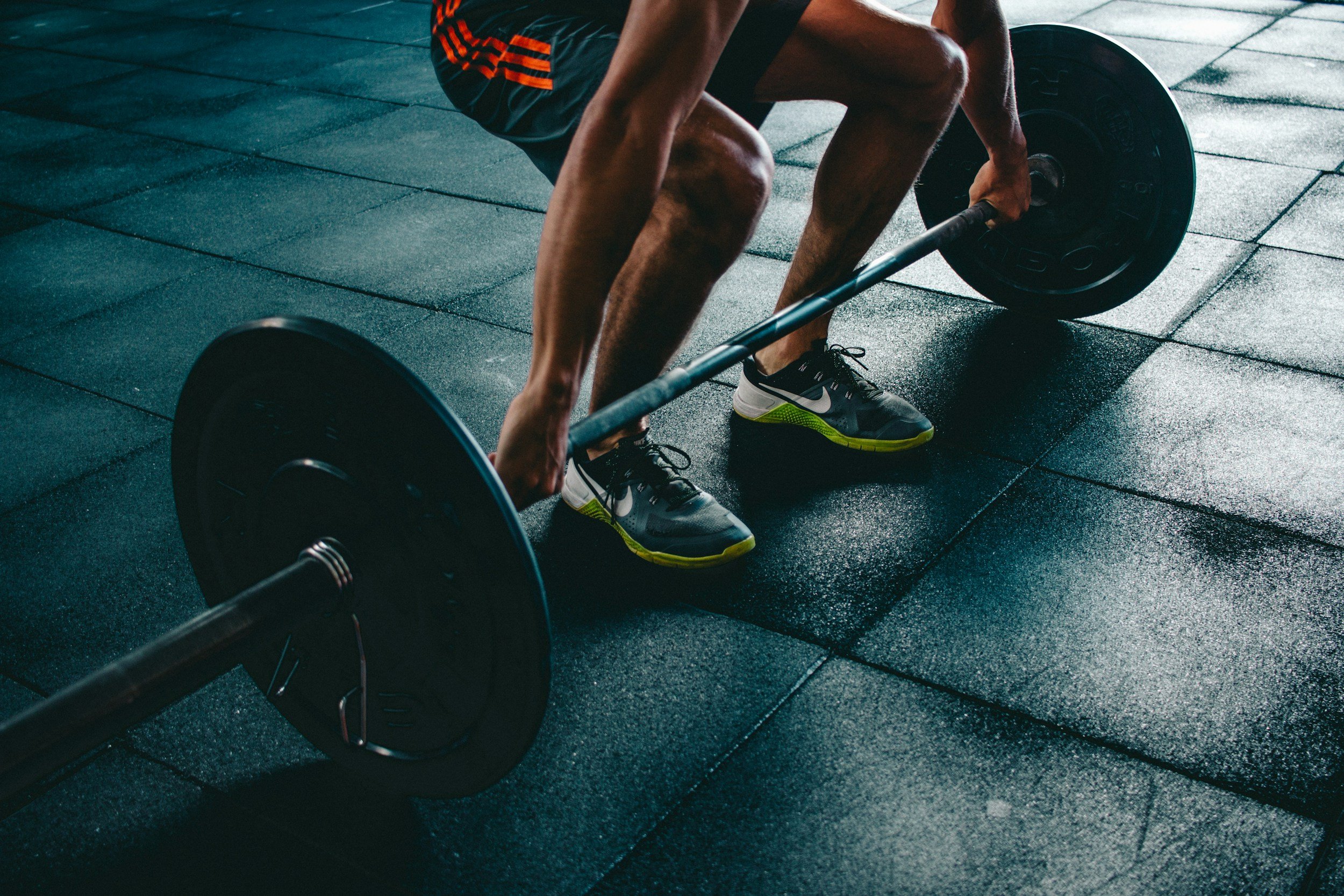
The deadlift is to the exercise world what the shark is to the oceans. Deadlifts are wrongly feared because they are so wholly misunderstood. Deadlifts should be a cornerstone of every single training program, regardless of one’s specific goals. I spent years avoiding them out of fear and a lack of knowledge, and I’m still repairing the damage that avoidance caused. Now, I hope to put you on the right track by debunking common misconceptions around the deadlift and helping you understand why it’s imperative to make them a part of your training as soon as possible.
1. Deadlifts are bad for your back
An accurate statement would be: bad deadlifts are bad for your back. Anyone who’s been around the gym long enough has met another lifter who’s sworn off deadlifting after a back injury. It was hearing those stories that made me avoid it for years as well, thinking I could replicate its benefits by training the muscles individually.
Done with proper spinal alignment, deadlifts actually serve to strengthen your lower back. Ironically, a weak and/or tight posterior chain (the muscle group that deadlifts target) is a common cause of lower back pain. A 2021 study found that targeted posterior chain resistance training (as opposed to non-specific training) significantly reduced pain in patients with chronic lower back pain over a four-month period (Tataryn et al., 2021).
2. Deadlifts are a hamstring exercise
True, a high percentage of the load is borne by the hamstrings. However, the movement also recruits your glutes and lower back. Additionally, it trains your hip mobility, core stability, and core strength. There are many variations, which can train everything from your single-leg balance to your hamstring flexibility to your maximum force production.
3. Deadlifts are only for powerlifters
While powerlifters get all the deadlifting glory (like Thor Bjornsson, who just lifted a record 510 kg/1124 lbs in September), deadlifts are a crucial quality-of-life exercise for all age groups. People often joke about “picking things up and putting them down,” but if you can’t pick things up off the floor and put them down with correct form, one day you won’t be able to. Lack of mobility and functional ability leads to a lack of independence later in life, and is even associated with an increase in mortality in elderly populations (Keeler et al., 2010).
You don’t have to lift 500 pounds to derive benefits from deadlifting. Stop fearing the deadlift and start mastering it. Incorporate them into your workout routine, and you’ll reap the benefits.
References
Tataryn, N., Simas, V., Catterall, T., Furness, J., & Keogh, J. (2021). Posterior-Chain Resistance Training Compared to General Exercise and Walking Programmes for the Treatment of Chronic Low Back Pain in the General Population: A Systematic Review and Meta-Analysis. Sports Med Open. 7(17). https://pmc.ncbi.nlm.nih.gov/articles/PMC7940464/
Keeler, E., Guralnick, J.M., Tian, H., Wallace, R.B., & Reuben, D.B. (2010). The Impact of Functional Status on Life Expectancy in Older Persons. The Journals of Gerontology: Series A, Biological sciences and medical sciences. 65A(7). https://pmc.ncbi.nlm.nih.gov/articles/PMC2884085/

5 things I had to change to prevent pain while lifting
When’s the last time you squatted past 90 degrees? After experiencing leg pain yet again on a squat, I realized I couldn’t answer the question. Toddlers can sit ATG for hours at a time, and they have significantly weaker legs than me. That’s our natural range of motion as a human being, but we lose that mobility through years of not utilizing it.
Starting your weightlifting journey is exciting. You progress quickly, feel stronger and healthier, and you start getting excited for each workout. Inevitably, you begin experiencing pain somewhere down the line. Your progress slows, you can’t figure out what you’re doing wrong, and frustration builds. Don’t worry. I’ve been there too. With a decade of weightlifting under my belt (the first few years of which were marked by completely irresponsible lifting), I’ve had pain in just about every muscle and joint in my body. After years of study, I’ve identified five main reasons that explain pain in the majority of the weightlifting population (besides insufficient warm-ups, because duh).
Mobility issues
When’s the last time you squatted past 90 degrees? After experiencing leg pain yet again on a squat, I realized I couldn’t answer the question. Toddlers can sit ATG for hours at a time, and they have significantly weaker legs than me. That’s our natural range of motion as a human being, but we lose that mobility through years of not utilizing it. How many of us spend the whole day seated, shoulders rounded and hunched forward? My knees are screaming on squats because I was asking them to flex (against weighted resistance, no less) to a degree they hadn’t in years. I got shoulder pain on chest flyes because my shoulders had been locked in a rounded position. Limited mobility is a recipe for disaster, and puts you at risk for sprains and strains. Our modern lifestyle and improper training are main causes of this. Mobility limitations are often the first thing I address when starting a client on a new training program.
Training with a limited range of motion/compromised form
Similarly, training without utilizing the full range of motion is a major cause of injuries. When I was just starting off, I would see guys and girls pressing dumbbells twice the size of mine. I started obsessing over what weight I “should” be lifting instead of how much I actually could. I over-activated my shoulders on bench press, used my trapezius on lateral raises, and rounded my back on pushdowns. I was lucky to escape without any major injuries. Even so, I caused muscle imbalances and mobility issues that took a long time to resolve. Now, I focus on how much intensity I can siphon out of each rep with a weight I can control through my full range of motion, and haven’t been injured since.
Core weakness
When I began training, I was enamored with the classic physiques of the ‘50s. I searched every crevice of the internet for the notes of guys like Steve Reeves and Reg Park, and followed their advice to a T. Given that and hearing from everyone online that “abs are made in the kitchen,” for many years I skipped ab training entirely, yet I couldn’t figure out why my back was hurting on certain lifts. I would have back pain when backpacking, or even just when sitting. That’s not supposed to happen. If your core is weak, you will be lacking the strength to stabilize your body in virtually every movement you could possibly do. Do your damn crunches.
Overtraining
There is a prevalent mentality (especially among men) that training needs to always be done to complete failure–that you need to punish your body for it to grow. This is not a healthy mentality, especially with longevity in mind. That doesn’t mean you get a pass for not breaking a sweat, but max-effort sets should be used intentionally and not constantly. At the peak of my training volume, I was training two or more hours daily, six days a week. After the first day of the week, I would progressively feel worse. By the end of the week, the minor pains were adding up. Your body knows best–pain is a sign that something is wrong. Generally, pushing through pain is bad for you in the short and long term.
Poor spinal stabilization
Similar to the aforementioned core strength issue, without a stable spine, everything is compromised. Whether you’re just sitting or are performing a one-rep max squat, all your joints (with your spine being the center) need to be organized to ensure a stable kinetic chain. The more unstable, the more imbalanced the transfer of force will be. I spent many years with poor spinal alignment/stabilization. Ironically and luckily, this caused me enough discomfort to never try to go too heavy, so I never hurt myself seriously, but many others are not so lucky. If you take only one piece of advice from this article, let it be the importance of proper spinal stabilization.